
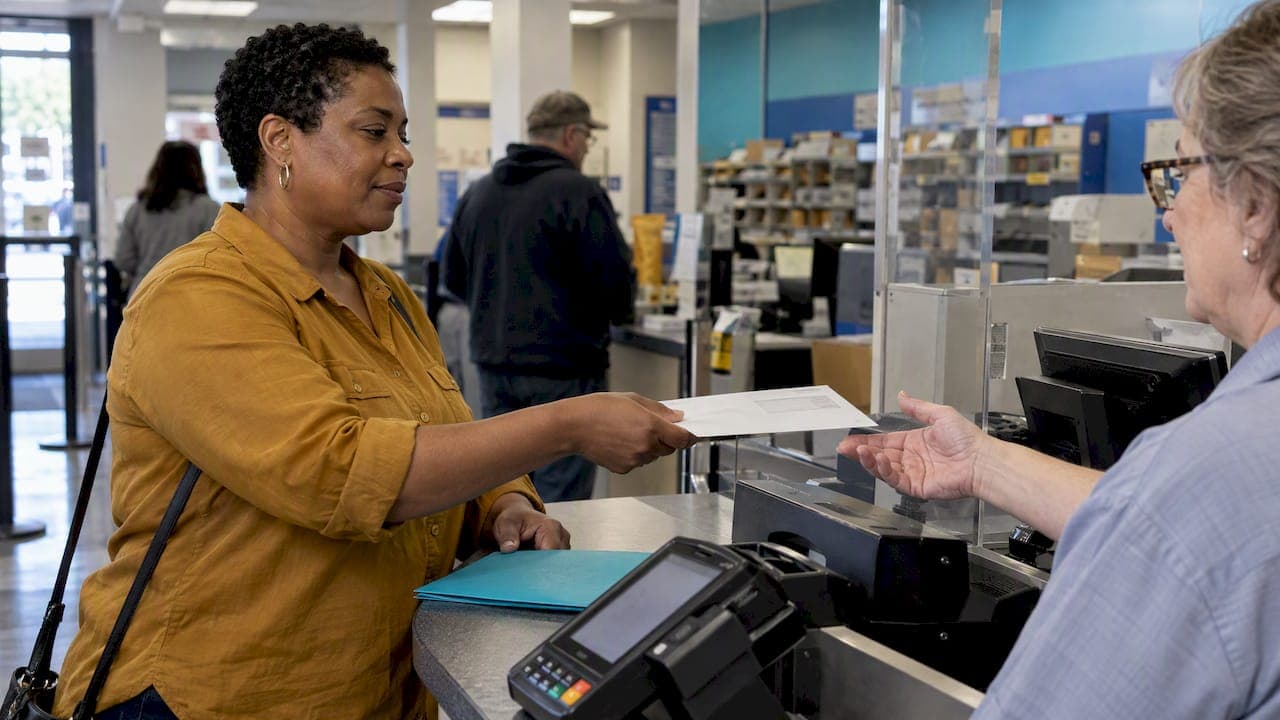
For most solo contractors, the answer is about 90 days past the due date, and only after you have followed up in writing, made a call, and sent a final demand. Go sooner if the customer goes silent, breaks a payment promise, or looks like they are in financial trouble. Go later if the customer is still talking to you and paying in pieces.
This guide gives you a simple timeline you can use on a plumbing, electrical, HVAC, handyman, landscaping, or cleaning invoice. It also covers what to get ready before you hand off a file, what agencies cost, and the rules you should know.
TL;DR
- Plan on 90 days past due as the usual point to consider an agency, after your own reminders, a written notice, and a final demand have failed.
- Refer sooner if the customer stops answering, breaks a payment promise, or seems to be in financial trouble. Invoice age alone should not decide it.
- Agencies commonly keep 25% to 50% of what they recover, so a small invoice may not be worth handing off.
- Build the file first: quote or contract, proof the work was done, the invoice, and every message you sent.
- The best fix is upstream: send the invoice the day the job ends, ask for a deposit, and automate reminders.
Table of Contents
- The short timeline: when each step should happen
- What counts as "collections" for a tradesperson
- Before you even think about collections: the follow-up steps
- Signs you should send it out sooner than 90 days
- Signs you should wait or skip collections
- Build your file before you refer anything
- What to check before you hire an agency
- The rules you should know
- Stop it earlier: how to need collections less
- Our perspective
- Get the invoice out the day the job ends
- FAQ
- Sources
The short timeline: when each step should happen
There is no law that says you must wait a set number of days. Sources that give numbers describe a practical window, not a legal one. One collections firm calls 60 to 90 days past due a practical window for outside collection on many business invoices. Another guide says to consider an agency at 90 or more days past due once your own efforts have failed, because self-collection success drops sharply after that point.
Here is a timeline that fits a solo operator. Treat it as a starting point and adjust it to your jobs.
| When | What you do |
|---|---|
| Day of job completion | Send the invoice with a pay link. Terms are printed on it. |
| Before the due date | Friendly reminder (text or email). |
| Due date | "Due today" reminder with the pay link. |
| 1 to 14 days late | Polite follow-up by text or email, then a phone call. |
| 15 to 30 days late | Second call. Offer a payment plan if it makes sense. Pause any new work for this customer. |
| Days 22 to 45 | Formal written notice by email and certified mail. |
| Days 46 to 60 | Final demand letter with a firm deadline. |
| 60 to 90 days | Last owner-to-owner call. Decide: small claims, agency, or write it off. |
| 90+ days | Refer to an agency if you have a clean file and the amount is worth it. |
The formal notice window of days 22 to 45, then a final demand on days 46 to 60 comes from a collections guide for small businesses. It is one reasonable schedule, not a rule.
What counts as "collections" for a tradesperson
People use the word three ways, and mixing them up causes trouble.
- Your own collection effort. Reminders, calls, and letters you send yourself. This is the first 60 to 90 days.
- A collection agency. A company that works your unpaid invoice for a share of what it recovers. This is what the search usually means.
- Legal action. Small claims court or a lawyer's demand letter. In many cases this is a better fit for a single $1,800 water heater job than an agency is. Court limits and filing rules differ by state, so check your own state court's website.
Also keep the paperwork terms straight, because the right document matters in a dispute:
- A quote or estimate is the price you offer before work starts. Once the customer approves it, it is your record of what was agreed.
- A deposit is money paid up front, before or at the start of the job.
- An invoice is the bill after the work is done. It should show the approved price, the deposit already paid, and the balance due.
- A follow-up is any reminder you send after the due date.
Before you even think about collections: the follow-up steps
The Better Business Bureau lays out a plain order for chasing money. Confirm the invoice and reminders were actually sent, send polite follow-ups by email or phone, consider a payment plan, pause work for nonpaying customers, and set new rules if you keep working with them.

Step 1: Check that the customer really got the invoice
A surprising number of "unpaid" invoices were sent to an old email, got lost in a spam folder, or went to a spouse who never saw it. Look at your sent messages. If you can, resend by text and email.
Example: an HVAC tech finishes a $420 capacitor and contactor repair on a Friday and emails the invoice. Two weeks later, no payment. A text with the pay link gets it paid in an hour. The email had gone to spam.
Step 2: Send short, friendly reminders
Keep it plain. Name the job, the amount, the due date, and how to pay. Skip the guilt.
Hi Maria, this is Tom from Tom's Plumbing. Quick reminder that invoice #214 for $385 (the kitchen drain repair on the 3rd) was due on the 17th. You can pay here: [link]. Let me know if you have any questions.
If you do not want to type these every time, our guide to setting up invoice reminders walks through a schedule you can set once.
Step 3: Pick up the phone
Texts are easy to ignore. A two-minute call often finds the real problem: a dispute about the work, a cash crunch, or a bill that got buried. If the customer says the work was not right, stop chasing and switch to solving. Our invoice dispute scripts help with that call.
Step 4: Offer a payment plan when it fits
A customer who can pay $200 a month is better than a customer who pays nothing. Put the plan in writing: amount, dates, and what happens if one is missed. Many homeowners with a big repair bill, like a $6,500 panel upgrade, will say yes to this.
Step 5: Pause new work
Stopping work on the project is a step the BBB and other sources recommend, because it gives the customer a reason to deal with the bill and keeps you from taking on more unpaid costs. For a landscaper on a recurring contract or a cleaner with a weekly route, that means skipping the next visit until the account is current. Say so politely and in writing.
Step 6: Send a formal notice, then a final demand
When reminders fail, move to writing that you can prove you sent. Email plus certified mail is a common pair. Then send a final demand with a clear deadline. Our final demand letter guide suggests 7 to 14 days to respond, then you act. Our overdue invoice templates cover the whole sequence with copyable wording.

Step 7: Make one owner-level call
If the customer is a business, such as a property manager, a restaurant, or a small office, and you have only been talking to a clerk, try one call to the owner. Credit professionals describe an owner or executive call as an effective final internal step before an outside referral. Keep it calm and short.
Signs you should send it out sooner than 90 days
Invoice age is only one signal. One collections firm advises referring sooner when a customer stops responding, breaks a payment promise, or looks financially distressed. Real-world versions of that:
- The customer's phone goes straight to voicemail, and texts and emails go unanswered after your final demand.
- They promised to pay Friday, then the next Friday, then stopped replying.
- A business customer's shop is closed, or they mention a bankruptcy or layoffs.
- The check bounced.
In these cases, waiting costs you. A stale debt gets harder to collect, and other creditors are already in line.
Signs you should wait or skip collections
Do the math before you hand anything off. It makes practical sense to refer an invoice when your own time and effort cost more than the share an agency is likely to recover. The flip side matters too.
- Small balance. Agencies typically charge 25% to 50% of what they recover, depending on how old the debt is. On a $250 invoice, you might net $125 to $188, and some agencies will not take small accounts at all.
- Active dispute. If the customer says the work was wrong and you have not tried to settle, an agency will not fix that. Try a repair visit, a partial credit, or a written agreement first.
- Weak paperwork. No approved quote, no photos, no signed completion? Fix the file first or consider small claims.
- Customer still talking. A customer who answers your calls and sends something each month is not a collections case.
Build your file before you refer anything
A clean file gets taken faster and works better. Collections firms advise assembling a signed contract, proof of work or delivery, the invoice, and a record of every payment attempt. For a trade job, that looks like:
- The approved quote or estimate, with the customer's sign-off (a text "approved" counts as a record, but a signature is stronger).
- Any change orders, such as extra outlets or an added shutoff valve.
- Before and after photos, with dates.
- Proof the job was done: a signed completion note, or the customer's message saying the work looks good.
- The invoice, with terms and the due date.
- A list of every reminder, call, and letter, with dates and what was said.
- The final demand letter and proof it was sent.
- The customer's full name, billing address, phone, and email.
Keep all of it in one folder per job. If you use software that stores the quote, invoice, and reminder history together, the file nearly builds itself.
What to check before you hire an agency
Not every agency is a good fit. One small-business guide suggests you check that the agency is licensed in every state where your debtors live, carries a surety bond, and charges no upfront fees for contingency work. Beyond that:
- Ask what percentage they keep and whether it changes as the debt ages.
- Ask how often they report back to you and how they pay out recovered money.
- Look up complaints with your state attorney general or the BBB.
- Be careful with very low fee offers. Some credit professionals warn that cheap contingency rates may come from cherry-picking easy accounts and may not hold up on a tougher dispute.
- Read the contract for how long you are locked in.
The rules you should know
The federal Fair Debt Collection Practices Act is about consumer debts, which means personal, family, or household debts, not commercial ones. That is explained in a Congressional Research Service report, which also notes that California extended Rosenthal Act protections to small businesses in September 2024 and that states may add their own limits, such as call frequency.
What that means for you:
- A homeowner who owes you for a repair is a consumer. A property manager or restaurant owner is a business. Rules can differ depending on which one your customer is, so an agency will ask.
- If you collect your own debts, state laws may still bar harassing, threatening, or deceptive practices or limit how often you call. Stay polite, keep a record, and do not threaten anything you will not do.
- The federal law's general rule is that collectors may not contact a consumer before 8:00 a.m. or after 9:00 p.m. local time without consent. A good habit for you too: call during normal daytime hours.
- Never mention the debt to the customer's neighbors, employer, or family. Keep it between you and them.
For anything beyond this, such as liens or lawsuits, talk to a lawyer licensed in your state. Rules and deadlines differ a lot by state.
Stop it earlier: how to need collections less
The cheapest collections case is the one that never starts. One small-business guide reports that preventive credit policies can cut bad-debt write-offs by 40% to 60%. The BBB suggests clear estimates, signed contracts, and upfront payment or deposits.
Put that into practice:
- Send the invoice the same day. Do it from the truck or the driveway. The job is fresh and the customer is happy. Our mobile-friendly invoice guide shows how to make one a customer can pay from a phone.
- Print the terms. "Due on completion" or "Net 7" beats a blank due date. See the invoice terms solo contractors use.
- Take a deposit. For jobs with materials, like a $3,000 mini-split install, ask for a deposit up front. Our deposit invoice guide covers the bookkeeping.
- Ask for payment on completion in writing. Here is a one-page checklist and clauses.
- Add a late fee clause only if you will use it. See late fee basics for tradespeople.
- Keep your pipeline moving. Chasing one slow payer should not stop you from calling new leads back. These weekly follow-up habits for HVAC and plumbing shops keep the schedule full while you sort out the old bills.
- Cleaners: recurring clients are easiest to lose track of. See cleaning business invoicing.
Our perspective
Most solo trades owners we talk to do not have a collections problem. They have a timing problem. The job ends, the invoice goes out three days later, the first reminder never goes out, and by day 40 it feels awkward to ask.
We built Quotewren for that gap. A finished job becomes a quote, then an invoice with a pay link, and reminders go out without you thinking about it. Once the customer has paid, a three-touch text request asks for a Google review while the job is still fresh. Getting paid and getting reviewed are the same habit: follow up quickly, politely, and every time.
We keep it simple on purpose. You are one person with a truck, not a back office. You do not need a fleet-sized system to send a clean invoice on the day you finish. You need a tool that does the boring follow-up so you can keep working.
jaras
Get the invoice out the day the job ends
If you are reading this because an invoice is already late, start with the timeline above. If you want fewer late invoices next quarter, make sending and chasing automatic.
Quotewren turns a finished job into a branded quote, then an invoice with a pay link, and sends review requests by text after the job. You can start on the free plan, and paid plans are $19 a month for Quotewren or $39 a month for Quotewren Crew.

Try Quotewren free and send your next invoice before you leave the driveway.
FAQ
Is there a set number of days before I can send an invoice to collections?
No. There is no legal waiting period. The common practical window is 60 to 90 days past due, and many sources point to 90 days or more as the point to consider an agency. Your own steps, such as reminders, a formal notice, and a final demand, should come first.
Should I send a final demand letter before collections?
Yes, in most cases. It shows you gave the customer a fair, clear chance to pay, and it becomes part of your file. Give a firm deadline, such as 7 to 14 days, and state exactly what you will do next if it passes.
Will sending a customer to collections hurt their credit?
That depends on the customer and the agency. Many consumer debts only show on a credit report if the agency reports them, and business accounts follow different reporting rules. Do not use credit damage as a threat in your messages. Focus on the amount owed and the deadline.
Is it worth sending a small invoice to collections?
Often not. Agencies commonly keep 25% to 50% of what they recover, and some will not take small accounts. For a few hundred dollars, a firm final demand and small claims court can make more sense. Check your state's small claims limit first.
Sources
- BBB Business Tip: How to collect (and avoid) unpaid invoices
- Small Business Debt Collection Guide 2026 | RecovAsset
- How Long Should You Wait Before Sending an Unpaid Invoice to Collections | Toro Recovery
- Calling in the Collection Cavalry
- Consumer-Style Protections for Small Businesses | Congressional Research Service
- Fair Debt Collection Practices Act | Federal Trade Commission
- 9 lead follow-up habits for East Valley HVAC and plumbing shops