
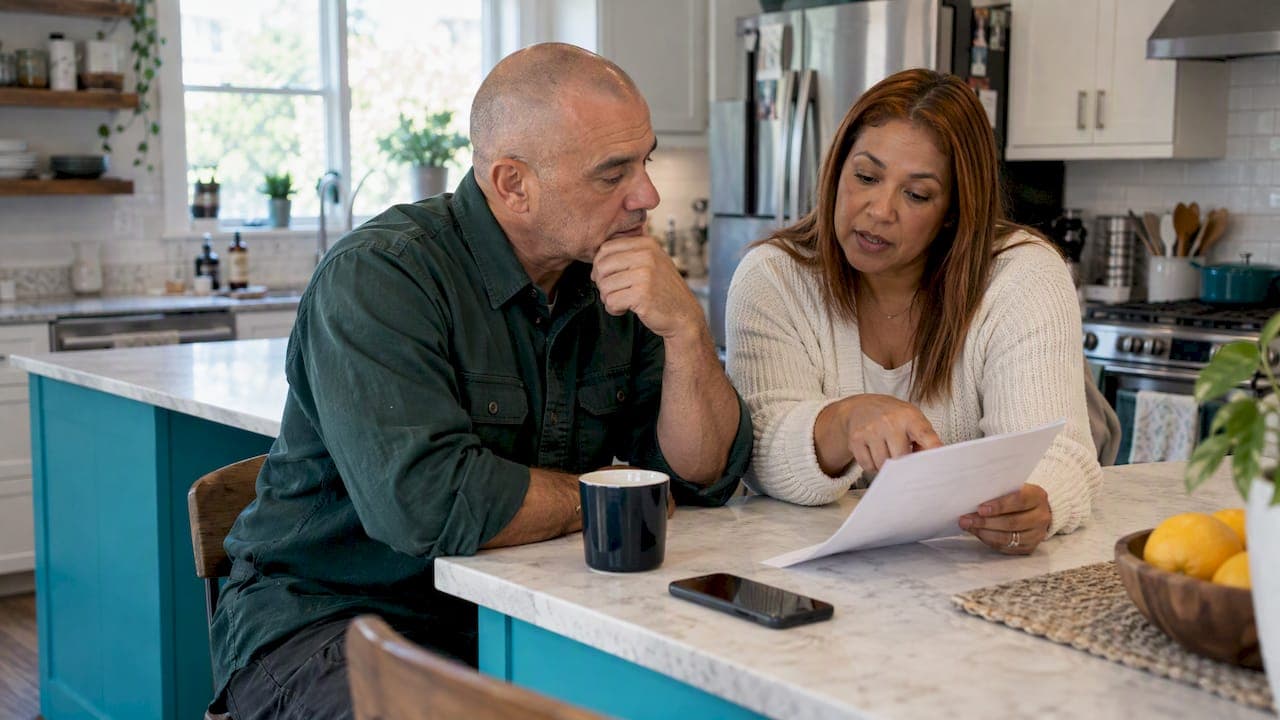
Most late payments in the trades come down to three things: unclear terms, a slow invoice, and a hard way to pay. Fix those, then follow up on a set schedule, and most clients pay on time. For the few who still don't, you need a calm escalation plan, not a angry phone call at 9 p.m.
This guide walks through why clients pay late, what to set up before the job starts, what to send after it ends, and what to do when the money still doesn't show.
TL;DR
- Put payment terms on the quote and the invoice, in writing, before work starts. Ask for a deposit on bigger jobs.
- Send the invoice the day the job is done, with an easy way to pay on it.
- Follow a set schedule: a reminder before the due date, one on the due date, a phone call a week late, then a formal letter.
- Only charge late fees if the client was told ahead of time, and check your state's limits.
- If a client keeps paying late, change the terms for that client: prepayment, smaller milestones, or stop work.
Table of Contents
- Why clients pay late
- What late payments cost a solo operator
- Before the job: set terms that get you paid
- After the job: send the invoice fast and make it easy to pay
- A follow-up schedule you can copy
- When the client says there's a problem
- When they just don't pay
- What to do about repeat late payers
- Our perspective
- Put the quote, invoice, and review in one place
- FAQ
- Sources
Why clients pay late
It helps to know what you're dealing with. Most late payers are not crooks. A FNBO business guide lists the usual causes: disorganization, approval bottlenecks or mistakes on the invoice, unhappiness with the work, a client who is ending the relationship, a client who can't pay, or one who is stretching out their own cash flow.
Translate that to your truck:
- The homeowner who forgot. You sent a PDF to an email they rarely check. It's buried under coupons.
- The property manager waiting on approval. Your invoice is sitting on someone's desk. Nobody told you the owner has to sign off first.
- The landlord with a wrong name on the invoice. The bill says "John Smith." Their accounts team needs the LLC name. It bounces back.
- The customer who isn't happy. The AC still blows warm air, or the fence gate sags. They won't say so. They just don't pay.
- The customer who is short on cash. This one needs a different conversation, which we cover below.
Notice how many of these are your side of the job: a vague invoice, a slow invoice, or a hard-to-use invoice. That's good news. You can fix those.
What late payments cost a solo operator
When you work alone, one unpaid invoice is not a bookkeeping detail. It's your truck payment, your supplier bill, or your own paycheck.
The SBA's Office of Advocacy reported back in 2008 that late payment can force small businesses to cut costs or look for other funding, and that it can put an otherwise healthy business at risk when cash is tight. More recent numbers say the same thing. Intuit QuickBooks' 2025 U.S. report found that 50% of small businesses with more overdue invoices had cash-flow problems, compared with 34% of those with fewer late payments. The same report found 60% of businesses with longer payment terms had cash-flow problems, against 40% of those using immediate terms.

The pattern is plain: the longer you wait, the tighter things get. If cash strain is already hitting your shop, reviewing where money leaks out can help too. This piece on cost reduction strategies for small businesses covers looking at operations first, before you cut anything else.
Before the job: set terms that get you paid
The cheapest way to handle a late payer is to never have one. Do these things before you pick up a tool.
Put the terms in writing
The Better Business Bureau recommends researching new clients, giving a clear estimate, using a signed contract, and asking for an upfront payment or deposit to cut your risk of nonpayment. It also says to state your late-payment policy openly, including what happens next, such as extra fees or stopping work.
Nolo says a service agreement should spell out payment dates and amounts, accepted payment types, and what happens if payment is late.
For a solo plumber, that can be as short as this on the quote:
Deposit of 30% due at approval. Balance due on completion. We accept card, ACH, and check. Invoices unpaid after 10 days may be charged a late fee of 1.5% per month.
That's four sentences. A customer who signs it can't say they didn't know.
Know your payment term options

"How long does a client have to pay?" has one honest answer: whatever you and the client agreed. Nolo lists the common terms as due upon receipt, Net 30 (30 days from receipt), and Net 60 (60 days from receipt). Dun & Bradstreet calls Net 30 the industry-standard term and says some businesses pick Net 7 or Net 15. It also says every invoice should state its terms.
Here's how that plays out in the field:
| Job type | Terms many solo pros pick | Why |
|---|---|---|
| Handyman repair, under a day | Due on completion | Small ticket, easy to pay on the spot |
| Water heater swap or panel upgrade | Deposit up front, balance on completion | You buy materials before you start |
| Recurring lawn or cleaning service | Due on receipt or Net 7 | Short cycles, easy to track |
| Work for a property manager or commercial client | Net 15 or Net 30, in writing | They often run approvals and pay cycles |
This table is a starting point, not a rule. You set the terms. For ideas on wording, see our guide on invoice terms solo contractors use, and our checklist on getting paid on completion.
Ask for a deposit
A deposit does two jobs. It covers your materials, and it filters out people who weren't going to pay. If a customer won't put down a deposit on a $4,000 mini-split install, you've learned something before you've bought the unit.
Keep a quote and an estimate straight in your head. An estimate is a rough guess of cost and can move. A quote is a firm price the customer agrees to. A deposit goes with an approved quote, and it should show up on the final invoice as a credit so the customer can see what's left. We cover how in deposit invoices and bookkeeping for solo trades and rules for collecting deposits on quotes. Put your refund rules in writing too: see this deposit refund policy example.
A note on late fees
Late fees can help, but they have rules. Nolo says a contractor should charge them only if the client was told in advance through the agreement or invoice, and state law may cap the amount. Nolo also says late charges should roughly match your actual losses instead of acting as a punishment.
So: put the fee in writing before the job, keep it modest, and look up your state's limits. Our practical guide to invoice late fees goes deeper. If you're unsure, ask a local attorney or your state's contractor licensing board.
After the job: send the invoice fast and make it easy to pay
Nolo's advice is to send the invoice promptly when the work is done, or on a monthly cycle for long projects. Same day is best. The customer is still happy with the fresh paint, the working outlet, the cool house. That's when paying feels easy.
A good invoice for a solo trade has:
- Your business name and contact info
- The customer's correct name (the LLC or company name for business clients)
- The job address and a plain description of what you did
- Line items for labor and materials
- Any deposit already paid
- The amount due, the due date, and your late-fee policy
- Ways to pay, ideally a button or link they can tap on a phone
That last one matters more than people think. If paying means finding a checkbook and a stamp, many people put it off. A pay link takes it down to one tap. Read more in how to get paid fast with an invoice payment link, online invoice payments for trades, and how to build a mobile-friendly invoice.
A follow-up schedule you can copy
Most solo pros chase payment when they remember to. A fixed schedule takes the guesswork and the awkwardness out. This one borrows from published guidance and adds trade-friendly wording.
The American Bar Association's collection-letter guidance suggests a reminder seven days before the due date and another on the due date. It says to phone the client once the account is seven days past due, then send a more urgent written notice right after.
| When | What you do | Tone |
|---|---|---|
| 7 days before due | Short text or email reminder with the pay link | Friendly |
| Due date | Second reminder | Friendly |
| 1 to 3 days late | Resend the invoice marked past due | Neutral |
| 7 days late | Phone call, then a written follow-up | Firm and polite |
| 14 to 21 days late | Formal collection letter | Serious |
Here are sample messages.
Before the due date (text):
Hi Maria, quick heads up: your invoice for the water heater install is due Friday. You can pay here: [link]. Thanks again for having us out.
A few days late (email):
Hi Maria, I don't see payment yet for invoice #1042, which was due on the 12th. I've attached it again in case it got lost. Let me know if anything on it looks off.
That last line is on purpose. It gives a customer with a complaint an easy way to say so.
The phone call
The BBB says to keep early follow-ups polite and friendly, use automated messages first, then a personal email, then a call. On the call, ask why the payment hasn't come, then listen. You might hear "I never got it," "the toilet is still running," or "I'm short this month." Each one has a different fix.
When the client says there's a problem
Can a client dispute an invoice? Yes. Customers dispute invoices over price, scope, or quality, and you handle it better when you stay calm and document everything.
- Ask what exactly they disagree with. Get it in writing, even if it's a text.
- Check your own paperwork. Compare the invoice to the signed quote and any change orders. If you made an error, own it, fix it, and resend.
- Go back and look. If the complaint is about the work itself, offer a time to come back and fix it. A fair callback usually costs less than a long fight.
- Pay what's not in question. If the dispute covers only part of the bill, you can ask for the undisputed part now while you sort out the rest.
- Keep your photos, messages, and signed approvals. They matter if this goes further.
This is why a written quote with a clear scope is so valuable. When both sides agreed to the work in writing, there's much less to argue about.
When they just don't pay
Suppose you've done the reminders and the call. Now what?
The BBB's steps are: contact the client politely and listen, consider a short payment plan, suspend work, and escalate to a collection agency or small-claims court if needed. For repeat late payers, it says to require prepayment or more frequent milestones.
Send a formal collection letter
Nolo says to send a written reminder soon after the due date, resend the invoice, and say payment hasn't arrived. If the client still doesn't pay in the extra time you give, move to a formal collection letter. Nolo says that letter should state the original due date, give a payment deadline (typically two weeks), list accepted payment methods, and explain what will follow if they don't pay.
Consider small claims court
For many solo jobs, small claims is the practical last step. It's built for people without lawyers, but limits and rules differ by state. Our guide to small claims court for unpaid invoices explains how it works for tradespeople. Check your own state court's website for the current dollar limit and filing fees.
Be careful with collection companies
If you hire someone to collect, read the fine print. The FTC once took action against a debt-collection operation that advertised "no recovery, no fee" but sometimes kept collected funds or asked for extra fees. Ask exactly what you'll pay and when, in writing, before you sign anything.
If you're short on cash while you wait
The SBA explains that invoice financing can give you advances against unpaid invoices while you keep control of your collections. It also describes invoice factoring as selling your outstanding invoices to a private lender for an advance, with the rest paid after your customer pays, minus lender fees. Both cost money, so compare the fees before you use either one. Talk with an accountant if you're not sure.
What to do about repeat late payers
Some customers are always late, but they're nice and they keep calling. At some point the question is whether they're worth it. Here's a simple way to decide:
- Change the terms. Move them to deposit plus balance on completion, or due on receipt.
- Shorten the work. Bill in smaller pieces so you're never owed much.
- Raise your price. If you must carry them, price in the time you spend chasing.
- Say no. It's fine to pass on the next job. Your time has a cost.
Our perspective
We built Quotewren for people who work alone, because we kept hearing the same story. The job is done, the customer is happy, and then the invoice sits for weeks. Nobody wants to be the pushy one, so the chasing slides to the bottom of the list.
Our view is that getting paid is mostly a system, not a talent. The quote sets the price and the terms. The invoice goes out as soon as the work is done, with a pay link on it. And a follow-up happens on schedule instead of when you remember. When those pieces live in one place, you spend less time on paperwork at night.
We also think reviews belong in the same flow. A customer who just paid and is happy is the best person to ask for a Google review. Our review requests go out by text after the job is complete, in up to three touches, so you don't have to remember. We designed Quotewren to keep it simple on purpose: no crew scheduling, no fleet tools, just quotes, invoices, pay links, and reviews at a flat price.
jaras
Put the quote, invoice, and review in one place
If you're tired of juggling a notes app, a word processor, and a payment app, Quotewren puts the quote, the invoice with a pay link, and the review request in one simple tool built for solo trades. You can start on the Free plan at $0. The Quotewren plan is $19 per month, and Quotewren Crew is $39 per month. See what's included on the Quotewren pricing page.

If you'd like to start with the paperwork, our free printable quote templates for trades include plumbing, HVAC, and handyman versions. You can try Quotewren when you're ready.
FAQ
How long does a client have to pay an invoice?
There's no single rule. It depends on the terms you and the client agree to, and those should be written on your quote and invoice. Common choices are due on receipt, Net 30, and Net 60, and many small trades use shorter terms like due on completion or Net 7.
Can I charge a late fee?
Yes, if the client was told about it in advance in your agreement or on the invoice. State law may limit how much you can charge. Keep the fee reasonable, and ask a local attorney if you're not sure about your state's rules.
What should I do first if a client doesn't pay?
Send a friendly reminder with the invoice attached and the pay link. If that gets no answer, call, ask what's going on, and listen. Many late payments come from lost invoices or a problem the customer hasn't told you about.
When should I stop work for nonpayment?
If your agreement says you can pause work for unpaid invoices, and the client has ignored reminders and a phone call, pausing is a common next step. Say so in writing first. For bigger jobs, bill in stages so you never have too much at risk.
Is small claims court worth it for one unpaid invoice?
Often, yes, for a job big enough to matter. It's designed for people without lawyers, though dollar limits and fees depend on your state. Gather your signed quote, invoice, photos, and messages first.
Sources
- Why Won't My Customers Pay on Time? (FNBO)
- Small Businesses Struggle with Cash Flow (SBA Office of Advocacy)
- 2025 US Small Business Late Payments Report (Intuit QuickBooks)
- BBB Business Tip: How to collect (and avoid) unpaid invoices
- How to Draft a Service Agreement (Nolo)
- Invoicing and Check Writing (Dun & Bradstreet)
- Freelance Invoicing: How to Write, Send & Get Paid (Nolo)
- When can I charge late fees or finance charges? (Nolo)
- Five Great Collection Letter Templates (American Bar Association)
- How to Collect Unpaid Invoices from Clients (Nolo)
- FTC Settlement Obtains Permanent Ban Against Abusive Debt Collection Operation
- 3 Ways to Get Working Capital for Your Business (SBA)
- 5 Simple Questions to Help Determine Your Business Financing Options (SBA)
- 17 Cost Reduction Strategies for Small Businesses (Raremind)