

Review gating is the practice of filtering which customers get asked to leave a review, usually by steering unhappy ones away and only inviting happy ones to post. It's not a gray area: the FTC and major platforms like Google both treat core gating tactics as prohibited, with real penalties attached. If you run a trades business and want reviews that actually hold up, you need to know where the line sits.
TL;DR:
- Review gating, including pre-screen surveys and selective asks, misleads consumers by hiding negative feedback, risking civil penalties up to $53,088 per violation.
- Google and other platforms actively detect and ban incentivized or biased reviews, with consequences like profile suspension and reduced visibility.
- Consistently asking all customers for reviews within 24 to 48 hours and disclosing incentives ensures compliance and builds genuine reputation.
- Suppressing negative reviews or only asking happy customers is illegal and damages long-term trust, with honest reviews providing more credible credibility.
- Automated review requests that follow standardized, transparent procedures help businesses stay compliant and attract trustworthy customer feedback.
Table of Contents
- What review gating looks like in practice
- What the FTC's Consumer Reviews and Testimonials Rule says
- How Google and other platforms handle gating
- The real business risk of gating
- How to collect reviews the right way
- Common myths that trip up honest businesses
- Why honest reviews pay off for solo tradespeople
- A simpler way to request reviews without the guesswork
- FAQ
- Sources
What review gating looks like in practice
Review gating shows up in a few common forms, and most business owners stumble into it without meaning to cause harm.
- Pre-screen surveys: a quick "how did we do?" question that quietly routes unhappy customers to a private form while happy ones get sent straight to Google.
- Selective asking: staff are told, often informally, to request a review only from customers who seemed satisfied on the job.
- Owned-display gating: a website or flyer that only shows the five-star reviews, leaving out anything critical, which misrepresents the full picture even if the hidden reviews stay live elsewhere.
Each version has the same effect: the public record stops reflecting what customers actually experienced. That's the part regulators and platforms care about, not the intent behind it.
What the FTC's Consumer Reviews and Testimonials Rule says
The FTC's Consumer Reviews and Testimonials Rule, found at 16 CFR Part 465, took effect on October 21, 2024. Section 465.7 of the rule deals directly with review suppression, and it bans businesses from knowingly blocking or filtering reviews based on the sentiment they express. In plain terms, you cannot build a process that quietly sends negative feedback into a private inbox while positive feedback goes public. That's suppression, even if nobody technically deletes anything.
The rule also bans knowingly buying or spreading fake reviews, including insider reviews from employees or family members who pose as regular customers. The FTC's warning letter template and guidance spells out specific examples, like claiming your displayed reviews represent your typical customer when you've actually excluded a chunk of them for being negative.
The FTC's rule allows civil penalties for knowing violations, with amounts that can reach $53,088 per violation under its current enforcement framework. That's not a number you want attached to your business for running a survey that quietly filtered out complaints.
The agency's underlying concern is simple: gating paints a false, rosier picture than what customers actually got, and that misleads the next person trying to decide whether to hire you.

How Google and other platforms handle gating
Platforms don't wait for the FTC to act. Google's Maps user generated content policy explicitly bans incentivized reviews, biased reviews, and anything that manipulates ratings, and the policy gives Google room to remove content or restrict an account that breaks it.
Google and similar platforms tend to flag the same warning signs:
- A sudden burst of five-star reviews right after a promotion or incentive offer.
- Reward or discount offers tied to posting a positive review instead of just posting any review.
- Reviewers with an obvious conflict of interest, like employees or close relatives of the owner.
When these signals trip, the consequences range from quiet review removal to a full profile suspension, and in some cases a drop in local search visibility that costs you leads for weeks.
The real business risk of gating
Gating rarely pays off the way owners hope. On the regulatory side, you're exposed to civil penalties under the FTC rule, and the agency has shown it's willing to use its expanded enforcement authority against deceptive review practices. On the platform side, a suspended Google Business Profile means your listing disappears from map searches right when someone's looking for a plumber or electrician near them, which is exactly the moment you can't afford to be invisible.
Then there's the slower cost: trust. Customers increasingly recognize when a review page feels curated, and one exposed incident, a screenshot of a gating survey, a complaint thread, a local news mention, can do more damage than a handful of honest two-star reviews ever would. A business with 40 real reviews averaging 4.3 stars usually reads as more credible than one with 60 reviews that all say "excellent" and nothing else.

How to collect reviews the right way
Compliant review collection isn't harder than gating, it's just more consistent; for practical, platform-focused tactics, see how to get more Google reviews without breaking the rules. Here's a workflow that works for a solo plumber, electrician, or landscaper:
- Ask every customer the same way, right after the job wraps up, regardless of how the job went.
- Use neutral language. Something like, "If you have two minutes, please share a Google review of the recent repair. Your honest feedback helps others and helps us improve," works because it doesn't hint at what kind of review you want.
- Automate the follow-up so the request goes out consistently instead of depending on you remembering at the end of a long day.
- Apply the same rules to everyone. If you offer a small incentive, like entry into a monthly gift card drawing, disclose it and make sure it's never tied to a review's star rating.
- Check new reviews for fakes. Watch for reviewers with no history, generic language, or a burst of five-star reviews with no activity before or after.
Pro Tip: Send the review request within 24 to 48 hours of job completion, while the work is still fresh in the customer's mind, and follow up once more about a week later if they haven't responded.
For more detail on timing and scripts, see how to get more Google reviews without chasing customers and turning 15 seconds of friction into more reviews.
Common myths that trip up honest businesses
A few misunderstandings keep otherwise careful owners in trouble.
- "I only asked happy customers, that's harmless." It's not. Selectively asking based on satisfaction is a form of suppression, even without a formal screening tool.
- "Any incentive is illegal." Not true. Incentives are fine when disclosed and offered to everyone equally, never when tied to leaving a positive review.
- Example: a cleaning business offers $5 off the next visit for any completed review, good or bad, and discloses it in the request. That's compliant.
Why honest reviews pay off for solo tradespeople
Gated reviews might look better for a week, but they don't hold up, and platforms are getting sharper at spotting them. Honest, consistent review collection builds a track record that actually convinces new customers, and it keeps you off the FTC's radar. Automating neutral requests removes the temptation to cherry-pick in the first place. For more tactical help, see the guides on QR code review links and Google Business Profile setup for trades.
A simpler way to request reviews without the guesswork
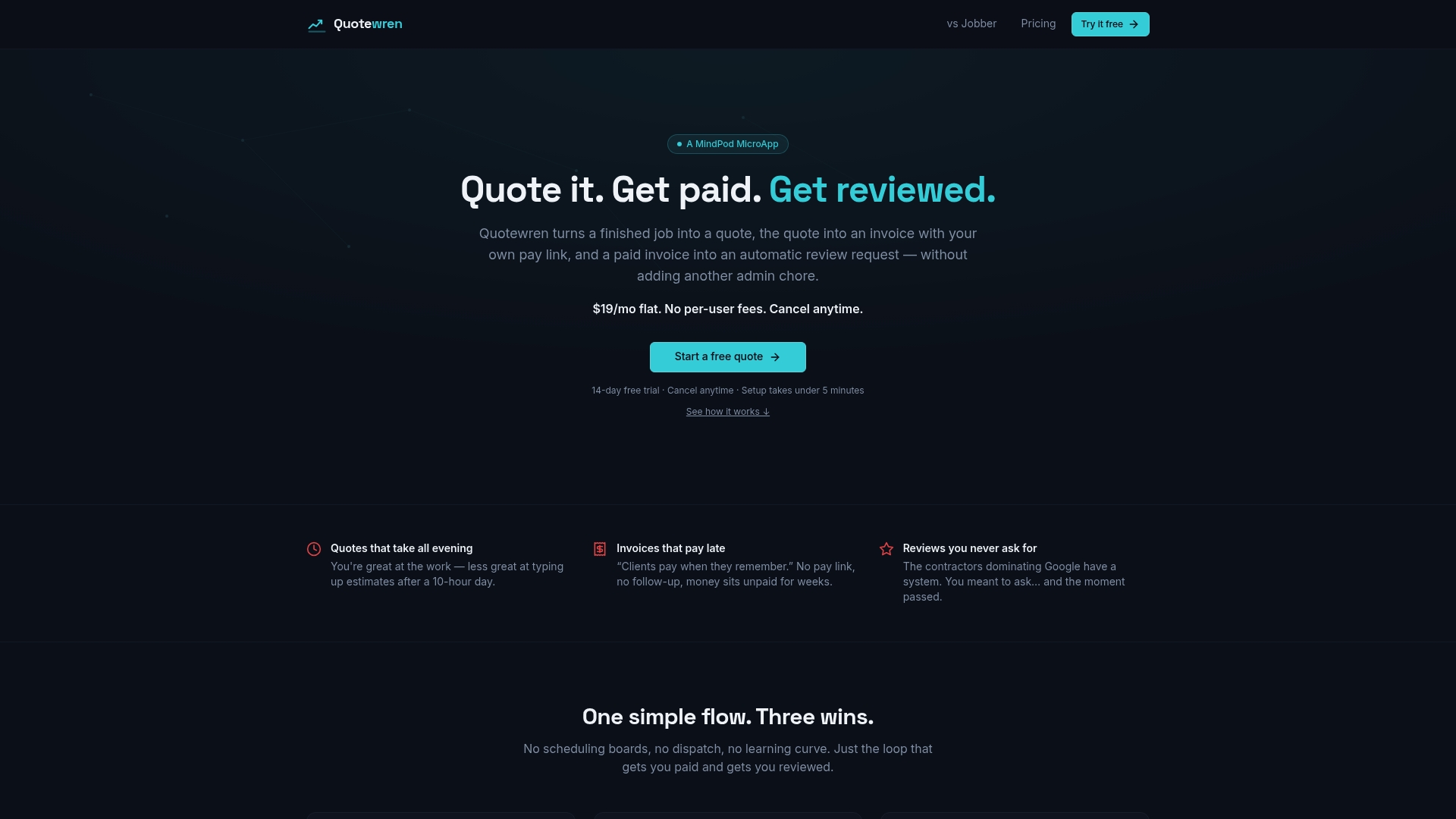
Quotewren automates the follow-up for you: once a job is marked complete, it sends the same neutral review request to every customer, no filtering, no cherry-picking, just a consistent ask. That keeps you aligned with the FTC and Google rules covered above without adding another task to your day. Quotewren offers several plans with flat monthly pricing; see their site for current details. You can check it out at App.
FAQ
Is review gating legal?
Core gating practices, like only asking satisfied customers or filtering out negative feedback before it posts, are prohibited under the FTC's Consumer Reviews and Testimonials Rule. Businesses that knowingly suppress reviews based on sentiment can face civil penalties under that rule.
What is Google's policy on review gating?
Google's contribution policy prohibits incentivized and biased reviews, and it allows Google to remove manipulated reviews or restrict accounts tied to rating manipulation. This applies whether the gating happens through a survey, a script, or a selective ask.
What is a review gate?
A review gate is any screening step, like a pre-review survey or a staff instruction, that routes customers to different outcomes based on how satisfied they seem. Unhappy customers get sent to a private channel while happy ones are pushed toward a public review site.
What are examples of five-star reviews?
A genuine five-star review usually names the specific work done, like a water heater replacement or a lawn renovation, and describes the result in the customer's own words. Reviews that feel compliant and trustworthy come from asking every customer the same way, not just the ones most likely to leave a glowing comment.
Sources
- The Consumer Reviews and Testimonials Rule: Questions and Answers | Federal Trade Commission
- Prohibited & restricted content - Maps user generated content policy (Google)