

ACH almost always costs less for bigger invoices and repeat customers, because it charges pennies or a flat fee instead of a percentage. Cards win when you need money right now or when a customer expects to tap a card on-site. For a $1,000 kitchen faucet repair, ACH might cost you $1. A card at 2.9% costs you $29. Read on for the exact math.
TL;DR:
- ACH typically costs $0.20 to $1.50 per transaction or a capped 0.5% to 1%, making it more economical for larger invoices and recurring payments.
- Card processing fees usually range from 1.5% to 3.5%, and the total cost can reach $125 or more on high-value jobs, including chargeback and assessment fees.
- ACH's settlement takes one to three business days unless paying a surcharge for same-day ACH, whereas card payments are authorized instantly but settle in one or two days.
- For small jobs under $200, card payments often cost less in dollar fees, while ACH savings accrue on invoices of $500 and above, especially for recurring service plans.
- Payment providers should be evaluated based on fee structure, dispute resolution costs, availability of same-day ACH, and actual transfer times before choosing the best method.
Table of Contents
- ACH vs Card Fees: How the ACH Rail Actually Works
- What Drives Card Processing Fees
- ACH vs Credit Card Fees: The Real Numbers by Invoice Size
- Pros, Cons, and the Right Rail for Each Trades Job
- How to Choose a Payment Mix: A Checklist for Solo Operators
- Who's Behind This Guide
- The Part Most Guides Skip
- Try Quotewren for Invoicing and Pay Links
- Sources
- FAQ
ACH vs Card Fees: How the ACH Rail Actually Works
ACH stands for Automated Clearing House. It moves money straight from your customer's bank account to yours, without a card network sitting in the middle taking a cut. Every ACH transfer runs through rules set by Nacha, the organization that governs the network, and settles through the Federal Reserve's FedACH system or a private clearing operator.
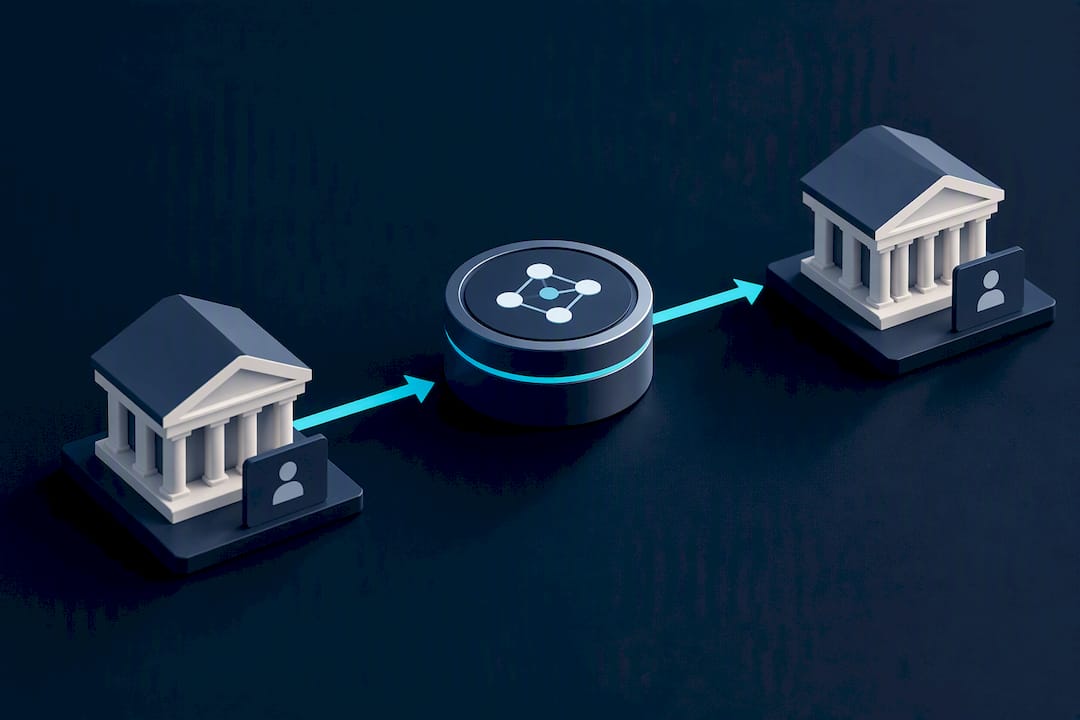
Three parties matter here: the originator (you, sending the request), the ODFI (your bank), and the RDFI (your customer's bank). You never see this plumbing. You just see a payment land in your account a day or two later.
Here's where the fees actually show up for a solo tradesperson:
- Flat per-item fees: many payment providers charge $0.25 to $1.50 per ACH transaction, regardless of the invoice amount.
- Percent-capped models: some providers charge a small percentage (often 0.5% to 1%) but cap it, so a $10,000 invoice might max out at $5 or $10 instead of scaling forever.
- Monthly or batch fees: a handful of providers bundle ACH into a flat monthly rate if you send a lot of transfers.
- Return fees: if a customer's account has insufficient funds or the routing number is wrong, expect a $2 to $5 return fee, similar to a bounced check.
Settlement normally takes one to three business days, though same-day ACH exists for a small surcharge if you need the money faster. The Federal Reserve's own fee schedule shows per-item network costs can drop to a fraction of a cent at high volume, with a small same-day surcharge layered on top. That's the wholesale cost banks pay. What you pay your provider will be higher, but the gap is usually still tiny compared to a card swipe.
What Drives Card Processing Fees
Every time a customer swipes, taps, or types in a card number, three separate charges stack up before the money reaches you. Interchange goes to the customer's card-issuing bank. Assessments go to the card network itself (Visa, Mastercard, and so on). Processor markup goes to whoever is running your payment terminal or app.
Add those three together and you land somewhere between 1.5% and 3.5% or higher, depending on the card type and your business category, according to GoCardless's breakdown of card versus bank-transfer pricing. Rewards cards and corporate cards tend to sit at the higher end. Basic debit cards usually cost less than credit cards because interchange is capped lower for debit under federal rules.
A few things worth knowing before you decide how you take payment:
- Authorization is instant: a card swipe gets approved in seconds, which is great for on-site jobs where you want confirmation before you drive away.
- Settlement still takes a day or two: "approved" doesn't mean the cash is in your account yet, even though the customer's charge shows up immediately.
- Fees scale with the invoice: a $50 job and a $5,000 job cost the same percentage, which means the dollar cost climbs fast on bigger tickets.
- Debit typically beats credit: if you can nudge a customer toward a debit tap instead of a credit swipe, you'll often shave a bit off the fee.
ACH vs Credit Card Fees: The Real Numbers by Invoice Size
Numbers make this easier to see than percentages ever will.
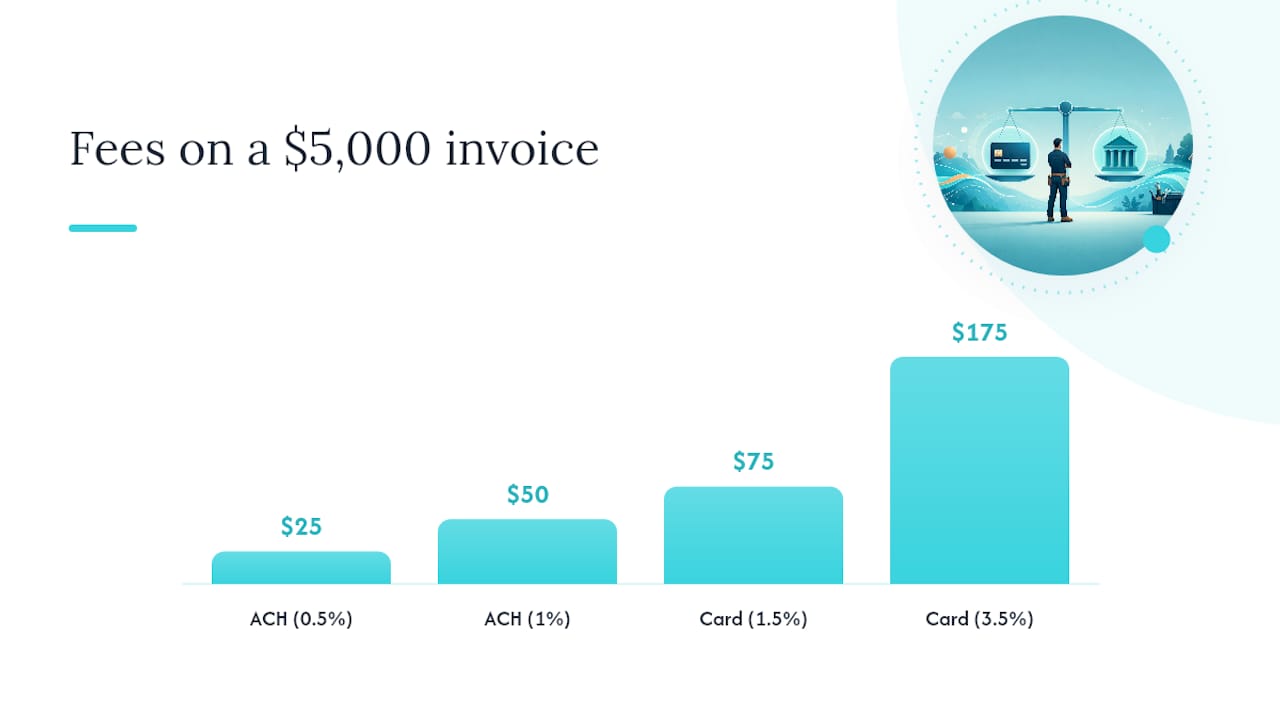
- A $150 service call (a clogged drain, a light fixture swap). ACH costs you $1.00. A card at 2.5% costs you $3.75. You keep $2.75 more with ACH, but the dollar gap is small enough that convenience might still win here.
- A $1,000 job (a water heater install, a small panel upgrade). ACH still costs $1.00. A card fee jumps to $25.00. That's the price of a fast-food lunch every single week if you run several jobs this size.
- A $5,000 job (a bathroom remodel, a full HVAC swap-out). ACH costs $1.00. A card fee hits $125.00. On a job with real materials cost already eating your margin, that's the difference between a decent profit and a thin one.
The break-even point shows up fast. Below that, the flat fee can actually cost more as a percentage of the ticket, which is why cards still make sense for small on-site jobs.
Statistic to remember: industry fee guides consistently show ACH running in the range of $0.20 to $1.50 per transaction or a capped 0.5% to 1%, while card processing commonly lands between 1.5% and 3.5% depending on the card and your merchant category.
Returns and chargebacks change the math too. An ACH return, usually from a bad account number or insufficient funds, typically costs $2 to $5 and gets resolved within a few business days. A card chargeback is a different animal. It can take weeks to resolve, often comes with a $15 to $25 dispute fee regardless of outcome, and the customer's bank can pull the money back out of your account before you've had a chance to respond. If you want funds faster than the standard window, same-day ACH or instant card payout options exist, but both charge a premium on top of the base fee.
Pros, Cons, and the Right Rail for Each Trades Job
Neither payment method wins every job. The right call depends on the size of the invoice and how badly you need the money right now.
ACH strengths: low flat fees, ideal for large invoices, works well for recurring service plans, lower dispute risk than cards.
ACH weaknesses: slower settlement (one to three business days), customers have to trust you with their bank details, some customers just don't know what it is.
Card strengths: instant authorization, familiar to every customer, works for one-time or walk-up payments, no bank account details needed.
Card weaknesses: percentage fees eat into margin fast on big jobs, chargeback risk, settlement isn't actually instant even though approval feels like it.
Here's how that maps onto real trades work:
- Deposits before a job starts: ACH, if the customer is comfortable with it, since deposits are often a set dollar amount and the savings compound over the season.
- On-site jobs under $200: card, because the fee difference is small in dollars and customers expect to tap or swipe on the spot.
- Recurring service plans (lawn care, HVAC maintenance contracts, pest control): ACH, almost every time. Recurring billing is where the flat-fee advantage adds up month after month.
- Large one-off invoices (remodels, panel upgrades, full system replacements): ACH, unless the customer specifically wants to use a card for rewards points.
Pro Tip: Offer a small cash-discount or ACH incentive, like knocking 2% off the total if the customer pays by bank transfer instead of card. It costs you less than the card fee would have, and most customers will take the discount without blinking. Just check your state's rules on surcharging before you flip it the other way and add a card fee on top of the price, since some states restrict or ban credit card surcharges outright.
How to Choose a Payment Mix: A Checklist for Solo Operators
Run through this before you commit to a processor or start pushing customers toward ACH invoice payments.
- Check your average ticket size. If most of your invoices run under $150, the card fee gap barely matters. If you're regularly billing $500 and up, ACH savings become real money.
- Sort recurring work from one-off jobs. Recurring maintenance contracts are the strongest case for switching to ACH, since the fee savings repeat every billing cycle.
- Ask your provider these four questions: What's the exact fee breakdown, flat or percentage? How are returns and disputes handled, and what do they cost? Is same-day ACH available, and what's the surcharge? When does the money actually hit my bank account?
- Test it on a handful of invoices first. Send five or ten real invoices with an ACH option included and see how many customers use it before rolling it out everywhere.
- Add a payment link to every invoice. Whether it's ACH, card, or both, a clickable pay link on your invoice removes the awkward step of chasing a check.
- Tell customers about the discount before they ask. A line on the invoice that says "pay by bank transfer and save 2%" does more work than any verbal pitch.
If you're rolling out ACH for the first time, a plain guide to ACH invoice payments walks through setup without the jargon. And if you're considering instant payout options on the card side, it's worth understanding what instant payment tools actually do before you pay extra for speed you might not need.
Who's Behind This Guide
This guide focuses on one thing: helping solo tradespeople get paid without losing a chunk of every invoice to fees they don't understand. The math above comes from public fee schedules published by the Federal Reserve and Nacha, plus explainers from payment processors who publish their own rate breakdowns.
Quotewren was built around this exact problem. You turn a finished job into a quote, then an invoice, with a pay link attached, so the customer can pay by whatever method you've set up. Once the invoice is paid, Quotewren automatically follows up for a Google review, so the job that just made you money also builds your online reputation. Plans run Free, Quotewren at $19 per month, and Quotewren Crew at $39 per month, all through App.
The Part Most Guides Skip
Most articles on this topic treat ACH and cards like a math problem with one right answer. It isn't. The conventional advice, "just switch everything to ACH and save money", ignores the fact that a lot of trades customers have never sent a bank transfer in their life and will bail on the job before they figure it out.
The real skill isn't picking a rail. It's knowing which jobs to push toward ACH and which to just let ride on a card, without making the customer feel like they're being sold something. A $5,000 remodel deposit is worth a five-minute conversation about saving money. A $120 emergency drain call at 9 p.m. is not the moment to explain bank transfers.
Start with your recurring customers. They're the ones paying you the same amount every month or every quarter, and they're the ones where a flat ACH fee compounds into real savings over a year. Leave the walk-up card swipes alone. That's where the fee math stops mattering and speed starts mattering more.
— jaras
Try Quotewren for Invoicing and Pay Links
Quotewren is built for the exact moment this article is about: the second a job wraps up and you need to turn it into a paid invoice without a lot of back-and-forth. You finish the water heater install, tap a few buttons, and the customer gets a professional invoice with a pay link attached, whether they're paying by ACH or card.
Two things make it worth a look if you're a solo operator juggling quotes, invoices, and reviews on your own:
- Quoting and invoicing happen in the same flow, so you're not rebuilding a job in three different apps.
- Every paid plan includes automated review requests, which go out to the customer right after payment clears, so you're not stuck remembering to ask.
If you send a lot of $1,000 and up invoices, testing an ACH pay link on your next few jobs is a low-risk way to see the fee savings in your own numbers. Start with the Free plan or step up to Quotewren at $19 per month at App and send your next invoice with a pay link attached.
Sources
- ACH vs. card transactions: How each payment method works — Stripe
- FedACH origination and receipt fee schedules — Federal Reserve Financial Services
- Nacha 2026 Schedule of Fees
- ACH vs. Credit Cards — GoCardless
Always check a provider's own schedule before committing. Volume, industry, and card type all move the numbers.
FAQ
Is It Better to Pay by Credit Card or ACH?
For a large invoice or a recurring bill, ACH usually costs less because it charges a flat fee instead of a percentage. For a small, one-time, on-site payment, a card is often the better fit because customers expect it and the dollar cost is minor at low ticket sizes.
Is It Legal to Charge a Fee for ACH Payments?
Yes, businesses can generally pass along ACH processing costs, though it's far less common than card surcharging since ACH fees are already so low. Check your payment provider's terms, since some bundle ACH costs into your overall rate instead of allowing a separate line-item fee.
Is There a Downside to ACH Payments?
The main downside is speed: ACH settlement typically takes one to three business days, compared to a card's instant authorization. Some customers also don't want to share bank account details, so ACH works better once you've built some trust with a repeat client.
Is It Legal to Charge a 3% Fee on a Debit Card?
Rules vary by state and by card network, and debit card surcharging is restricted or banned in some states even when credit card surcharging is allowed. Before adding any surcharge, check state-specific surcharge rules rather than assuming the same policy applies everywhere.
What Does Quotewren Cost for a Solo Tradesperson?
Quotewren offers a Free plan, a Quotewren plan at $19 per month, and a Quotewren Crew plan at $39 per month, all available at App. Each paid tier includes invoicing, pay links, and automated review requests built in.