
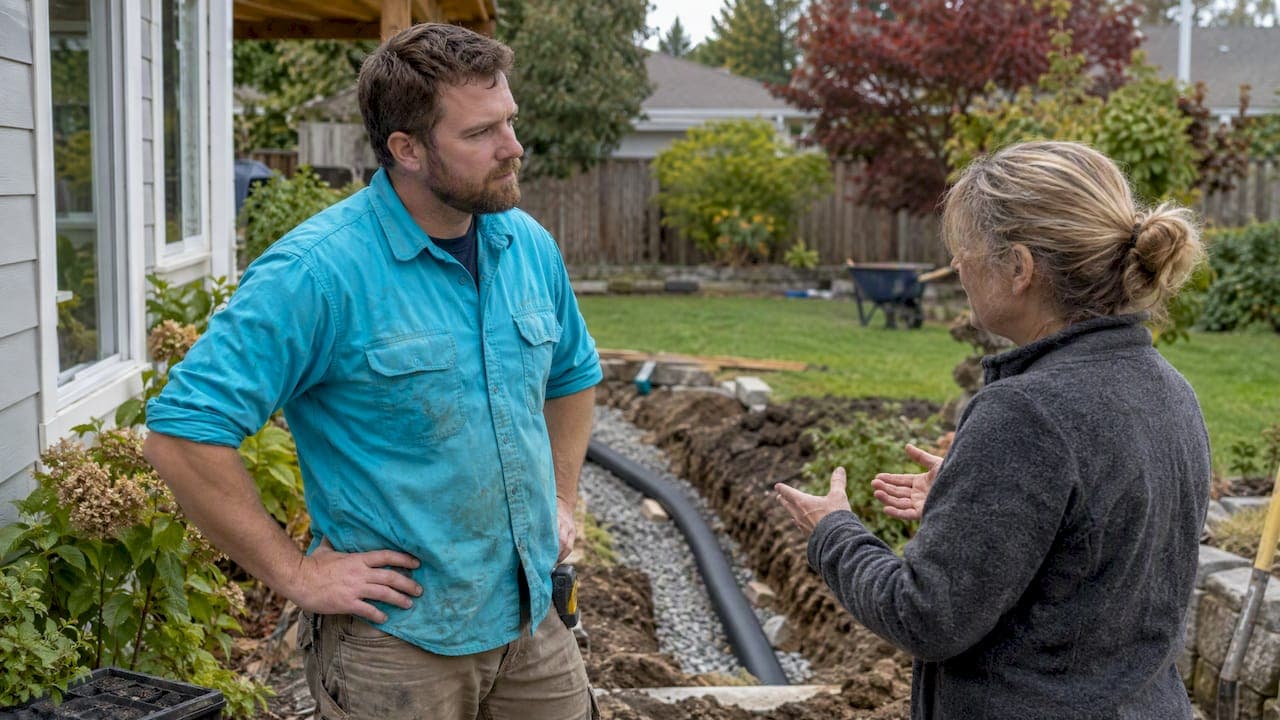
Don't apologize or cut your price. Ask one clear question instead, something like "Can you tell me more about what gave you pause?" That question buys you time and uncovers the real objection, which is often not about price at all. Below, we walk through a simple framework, copyable scripts, smarter alternatives to discounting, and a follow-up plan that respects both your time and theirs.
TL;DR:
- Use the LAER sequence: listen, acknowledge the concern, explore whether it involves trust, scope, timing, or cash flow, then respond to that specific issue.
- Offer phased work, remove optional items, arrange payments, or suggest lower cost materials; document scope changes in writing and collect a deposit before scheduling.
- A study cited by HubSpot found roughly 80% of sales need about five follow up attempts; schedule messages for Day 2, Day 5, and Day 12.
- Walk away when prospects fixate on price, evade questions about access or authority, or refuse a deposit or start date after repeated conversations.
- List materials, labor hours, and brand names line by line, then include a payment link so customers can compare scope and approve without extra steps.
Table of Contents
- Why "it's too expensive" often masks other concerns
- Step-by-step response framework (LAER) with scripts
- Profit-preserving alternatives to discounting
- Follow-up cadence and templates that don't waste your time
- When to walk away: signals a prospect isn't a fit
- How clear quotes and automated follow-ups cut down declines
- Keep pricing clear and protect your business
- Try Quotewren to send clearer quotes and automate your follow-ups
- FAQ
- Sources
Why "it's too expensive" often masks other concerns
When a customer says "that's too expensive," they rarely mean the number itself. Price is an easy, polite way to end a conversation without explaining the real hesitation, and that hesitation is usually one of these:
- They don't fully trust you yet, especially if this is a first job.
- The scope feels unclear, so they can't tell what they're actually paying for.
- They need to check with a spouse, landlord, or property manager first.
- Cash flow is tight right now, even if the price itself seems fair.
- They're comparing you to other estimates without comparing the actual work involved.
Unstated objections are the most dangerous kind, since you can't respond to a concern you never hear. Research from HubSpot found that a large share of lost deals trace back to buyer indecision rather than price itself, which means the "too expensive" comment is often a stand-in for something the customer hasn't said out loud.
Picture a plumber who quotes $2,400 to reroute a drain line. The homeowner says it's too much, but what's really bothering them is that the quote doesn't explain why the job takes two days instead of one. Or take an HVAC tech who bids a system replacement at $8,500. The customer hesitates, not over the number, but because a neighbor had a bad experience with a different contractor and now wants proof of licensing before committing. In both cases, chasing the price down would have missed the actual problem.

Step-by-step response framework (LAER) with scripts
The LAER method gives you a simple order of operations: Listen, Acknowledge, Explore, Respond. SalesLoft's breakdown of objection handling explains that exploring the concern before responding keeps the buyer from locking into a hard "no." Jump straight to defending your price, and you give them a reason to dig in instead of open up.
Here's how it plays out on a real call:
- Listen. Let the customer finish their objection without jumping in. Resist the urge to explain your pricing the second they pause.
- Acknowledge. Say something like, "I hear you, that's a fair amount of money for this kind of work." This isn't an apology, just a sign you're paying attention.
- Explore. Ask an open question: "When you say it's too high, is that about the total number, or is something else making you want to wait?" This single question does the heavy lifting.
- Respond. Once you know the real concern, speak to that specifically. If it's trust, offer references or show your license number. If it's scope, walk through exactly what's included.
A few more scripts worth keeping on hand:
- "What were the other estimates like, line by line?" (Surfaces scope mismatches.)
- "Is this a budget issue for right now, or do you have concerns about the work itself?" (Separates cash flow from trust.)
- "Would it help to break this into phases so you can start with the most urgent part?" (Tests willingness to commit at a smaller scale.)
Pro Tip: Ask your exploring question, then stay quiet. Most people fill silence with the real reason they hesitated.
Here's a short role-play. A landscaper quotes $3,200 for a backyard drainage fix. The customer says, "That's more than I expected." The landscaper responds, "Totally fair, can I ask what you were expecting to pay?" The customer admits they were hoping to spread it out. The landscaper offers a $500 deposit now to schedule the work, with the remainder split across two invoices tied to project milestones. The declined estimate becomes a signed deposit in under five minutes, with no discount involved.
Profit-preserving alternatives to discounting
Cutting your price to save a job feels like progress, but it rarely is. A straight discount trains customers to expect one next time, invites scope creep when they ask for "just one more thing" since they got a deal, and tends to produce the weakest referrals, since bargain customers rarely brag about the price they paid.
Better options protect your margin while still helping the customer get to yes:
- Offer phased work: "We can handle the main panel upgrade now and schedule the outlet additions next month."
- Remove optional line items: "If we skip the decorative trim work, that brings it down to $1,800."
- Set up a payment plan: "We can split this into three payments, with the first due as a deposit before we start."
- Swap materials for a comparable, lower-cost option when the customer's budget is the real constraint.
Whatever you agree to, document the reduced scope in writing and lock in the deposit before scheduling. A quick written confirmation, even a text summarizing what changed, helps avoid disputes later over what was supposed to be included. This single habit avoids most of the disputes that come up later over "what was supposed to be included."
Follow-up cadence and templates that don't waste your time
Most solo tradespeople give up too early. A Brevet study cited by HubSpot found that roughly 80% of sales require about five follow-ups to close, yet many reps stop after just one attempt. That gap is where a lot of estimate work quietly dies.
Here's a workable cadence for a declined or stalled estimate:
- Day 2, quick check-in (SMS): "Hey, just checking if you had any questions on the estimate I sent over. Happy to walk through it."
- Day 5, value reminder (email): "Wanted to follow up on the quote for your water heater replacement. This covers parts, labor, and a one-year warranty on the install. Let me know if a phased approach would work better for your budget."
- Day 12, final break-up message (email): "I don't want to keep bugging you, so this will be my last check-in. If now isn't the right time, no worries at all. Just reach out whenever you're ready and I'll get you scheduled."
Mixing SMS, email, and the occasional phone call keeps the follow-up from feeling like spam while covering however the customer prefers to communicate. Track replies in a simple spreadsheet or inside your quoting tool so you know exactly who's gone quiet and when their last touch happened. For a ready-made version of this sequence, our quote follow-up templates post walks through timing and wording in more detail.
When to walk away: signals a prospect isn't a fit
Not every declined estimate deserves five follow-ups. Some signals mean it's time to stop:
- The customer keeps steering every conversation back to price with no interest in scope or timeline.
- They're vague or evasive about site access, materials, or decision-making authority.
- They won't commit to a deposit or a start date after multiple conversations.
When you see these, a short, professional exit keeps the door open without wasting more of your week: "Sounds like the timing isn't right, no hard feelings. Reach out whenever you're ready and we'll get you on the schedule." A clean "no" from a bad-fit lead actually improves your pipeline, since it frees up hours for customers who are ready to commit.
How clear quotes and automated follow-ups cut down declines
A lot of "too expensive" objections start with a quote that doesn't explain itself. When materials, labor hours, and brand names are spelled out line by line, customers have less room to compare you to a vaguer bid from someone else. Pairing that with a payment link built right into the document removes a step that often stalls a decision. Short, automated SMS follow-ups sent right after you send the quote also catch customers while the job is still top of mind, instead of letting the conversation go cold. For more on tightening up your documents before they go out, see our checklist for avoiding common estimate mistakes and our quote vs. estimate guide.
Keep pricing clear and protect your business
Most price objections aren't really about money. They're about uncertainty, and uncertainty grows in the gaps between what you quoted and what the customer understood. The tradespeople who handle declines well aren't the ones with the lowest prices, they're the ones who ask one good question before reacting. Keep your quotes specific, your scope documented, and your follow-ups consistent, and most of the objections you're worried about never fully form in the first place.
— jaras
Try Quotewren to send clearer quotes and automate your follow-ups
Clearer documents and steady follow-up are easier to pull off when they're built into your workflow instead of something you remember to do by hand. We built Quotewren around that idea: branded quotes that spell out scope line by line, invoices with pay links built in so customers can say yes on the spot, and automated three-touch SMS follow-ups that go out after the job's done, no extra typing required.
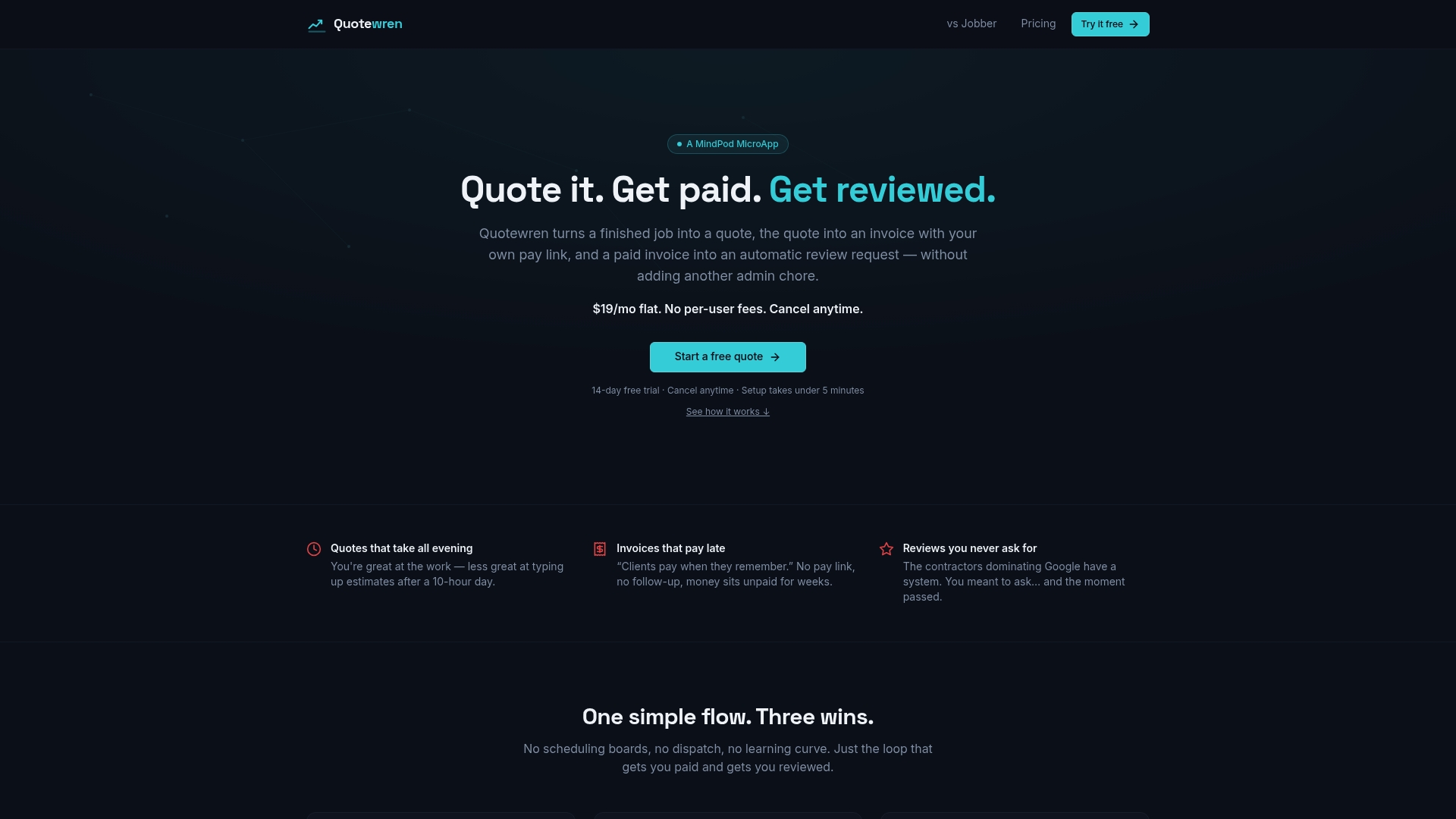
If you'd rather not build your own follow-up sequence from scratch, our free plan lets you send your first branded quotes and see how the automated review requests work before you commit to anything.
FAQ
What percentage of customers say no multiple times before saying yes?
Exact figures vary by industry, but research cited by HubSpot shows that most sales take around five follow-ups to close, meaning more than one "no" along the way is common. Giving up after a single follow-up is one of the most common reasons solo tradespeople lose winnable jobs.
What is the LAER method in sales?
LAER stands for Listen, Acknowledge, Explore, Respond, a framework described by SalesLoft for handling objections without rushing to defend your price. Exploring the real concern before responding keeps the customer from hardening their position.
Are customers harder to reach through traditional sales conversations now?
Buyer behavior has shifted: a Gartner survey found that 61% of B2B buyers prefer a rep-free buying experience, and many report mistrust when seller messaging doesn't match what they find on their own. Clear, consistent quotes help close that gap for solo tradespeople.
What are the main types of objections customers raise on estimates?
Objections generally fall into a few buckets: price concerns, trust in the contractor, unclear scope of work, and timing or budget constraints. Identifying which bucket a specific objection falls into, through a question like "is this about the total, or something else," is more useful than treating every objection as a price issue.
Should I document a declined estimate, and why?
Yes, keeping a record of what was quoted, what objection came up, and how you followed up helps you spot patterns across jobs and improve future proposals. It also protects you if a customer later disputes what was or wasn't included in a revised, lower-scope quote.
Sources
- Objection handling overview — SalesLoft
- Objection handling: 44 common sales objections & how to respond — HubSpot
- Gartner sales survey: rep-free preference — Gartner